


Biodegradable Toilet Paper: What It Is and Why It Matters
If you have ever stood in the toilet paper aisle wondering what the difference is between "eco toilet paper," "ecological toilet paper," and "biodegradable toilet paper," you are not alone. These terms get thrown around a lot, but they all point to the same basic idea: toilet paper that breaks down naturally and has a smaller impact on the environment than conventional products.
In this guide, we explain what biodegradable toilet paper actually means, whether regular toilet paper is biodegradable, and how to choose the most eco-friendly option for your household.

Is Toilet Paper Biodegradable?
Technically, yes. All toilet paper is biodegradable to some degree because it is made from natural cellulose fibres, whether those fibres come from trees, recycled paper, or bamboo. Given enough time, all toilet paper will break down.
However, the speed and completeness of that breakdown vary enormously. This is where the distinction between "technically biodegradable" and "genuinely biodegradable" becomes important.
Conventional toilet paper made from virgin wood pulp is treated with a range of chemicals during manufacturing: bleaching agents, wet-strength resins, softening compounds, fragrances, and dyes. These additives can slow down the natural decomposition process and leave behind residues that linger in the environment. Some of these chemicals, including PFAS (forever chemicals), do not break down at all.
So while conventional toilet paper will eventually decompose, it takes longer, and it leaves more behind than products specifically designed to be biodegradable.
What Makes Toilet Paper Truly Biodegradable?
For toilet paper to earn the label "biodegradable" in any meaningful sense, it should meet these criteria:
- It breaks down quickly in water. Good biodegradable toilet paper starts to disintegrate within seconds of contact with water. This is important not only for the environment but also for your plumbing. Paper that dissolves quickly is far less likely to cause blockages. If you have ever dealt with a toilet clogged by toilet paper, you know how frustrating that can be.
- It decomposes fully in soil and water treatment systems. Truly biodegradable toilet paper breaks down completely into water, carbon dioxide, and biomass, without leaving harmful residues.
- It is free from persistent chemicals. Biodegradable toilet paper should not contain chlorine bleach, synthetic fragrances, dyes, formaldehyde-based wet-strength resins, or PFAS.
- It is made from sustainably sourced materials. The most genuinely eco-friendly toilet paper uses raw materials that are renewable and responsibly harvested.
Types of Eco Toilet Paper
Not all ecological toilet paper is the same. Here is a breakdown of the main options.
Recycled Toilet Paper
Recycled toilet paper is made from post-consumer waste paper. It diverts paper from landfill and reduces the need for virgin wood pulp. However, recycled toilet paper has some drawbacks. The de-inking process uses chemicals, and the finished product can contain traces of BPA and other substances from the original printed material. It also tends to be less soft than other options.
That said, recycled toilet paper is still a significant step up from virgin wood products in terms of overall environmental impact.
Bamboo Toilet Paper
Bamboo toilet paper is made from bamboo grass, which grows to full maturity in three to five years and regenerates from its root system after harvesting. No trees are cut down, no replanting is needed, and bamboo produces more usable fibre per hectare than any commercial tree species.
Bamboo toilet paper is naturally soft, strong, and breaks down quickly in water. It is arguably the best all-round option for anyone looking for biodegradable toilet paper that does not compromise on quality. Learn more about what makes bamboo sustainable and the specific benefits of bamboo toilet paper.
Unbleached Toilet Paper
Some brands offer unbleached toilet paper that retains the natural brown or tan colour of the raw fibres. By skipping the bleaching step, these products avoid the use of chlorine-based chemicals entirely. Unbleached toilet paper is typically made from either recycled paper or bamboo and is a good option for anyone who wants to minimise chemical exposure.
Biodegradable Toilet Paper and Septic Systems
If your home uses a septic tank rather than mains sewerage, the type of toilet paper you use matters more than you might think. Conventional multi-ply toilet papers with wet-strength additives can take a long time to break down in a septic tank, potentially contributing to sludge build-up and system failures.
Biodegradable toilet paper, especially bamboo and recycled varieties, dissolves much faster and is far friendlier to septic systems. Many people who switch to bamboo toilet paper report fewer plumbing issues and longer intervals between septic tank pump-outs.
Biodegradable Toilet Paper and Camping
Anyone who spends time outdoors knows that disposing of toilet paper in the wild is a genuine concern. In many national parks and wilderness areas, visitors are required to pack out their used toilet paper or use only products that will break down naturally.
Biodegradable toilet paper is the only responsible choice for camping, hiking, and wild swimming. It decomposes far more quickly than conventional paper, reducing the visual and environmental impact if it does end up buried in the ground. Look for products that are certified compostable or that have been tested for rapid biodegradation in soil.
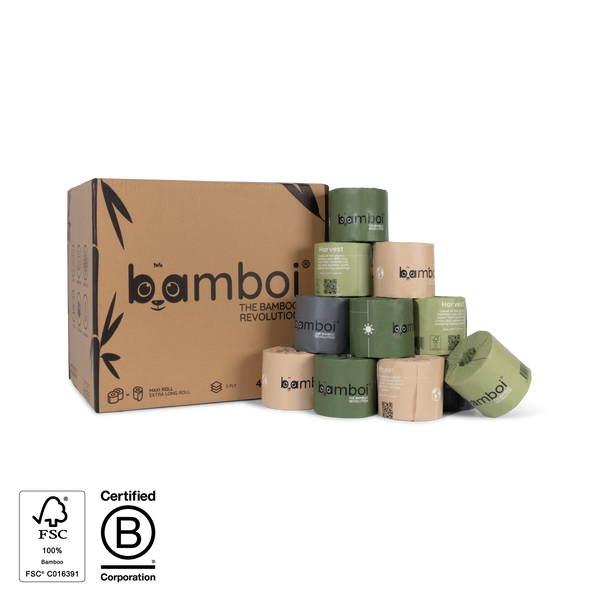
Bamboi
100% Bamboo Toilet Paper
48 MAXI rolls · 3-ply · Plastic-free packaging
€49,99
Order now✓ Free delivery · ✓ FSC certified
How to Test If Your Toilet Paper Is Biodegradable
Here is a simple test you can do at home. Place a few sheets of your toilet paper in a jar of water. Seal the jar and shake it vigorously for about 10 seconds. Then set the jar down and watch.
Truly biodegradable toilet paper will start breaking apart almost immediately. Within 30 to 60 seconds, it should be well on its way to dissolving into a fine slurry. If the paper is still mostly intact after a few minutes of soaking, it is not very biodegradable, no matter what the packaging says.
This test is also a good way to assess how likely a toilet paper is to cause plumbing blockages. Paper that dissolves quickly in a jar will dissolve quickly in your pipes.
Eco Toilet Paper: What to Look For
When shopping for eco toilet paper, here are the key things to check:
- Raw material. Bamboo and recycled paper are the most sustainable options. Avoid products made from virgin wood pulp unless they carry credible forest management certifications (FSC or PEFC).
- Bleaching method. Look for TCF (Totally Chlorine Free) or unbleached products. ECF (Elemental Chlorine Free) is acceptable but not as clean as TCF.
- Chemical additives. Avoid toilet paper with added fragrances, dyes, lotions, or formaldehyde. These are unnecessary and can irritate sensitive skin while slowing biodegradation.
- Packaging. The most eco-conscious brands package their rolls in paper or cardboard rather than plastic wrap. Some use compostable plant-based film.
- Certifications. Look for FSC certification, B Corp status, or other third-party environmental credentials.
The Bigger Picture
Choosing biodegradable toilet paper is not going to save the planet single-handedly. But it is one of those small, painless changes that adds up significantly over time. The average person uses around 100 rolls per year. Over a lifetime, that is thousands of rolls. If each of those rolls is made from a sustainable, biodegradable material rather than virgin forest wood, the cumulative difference is real.
And it is not just about the trees. It is about the water used in production, the chemicals that end up in waterways, the energy consumed in manufacturing, and the waste that accumulates in landfills and sewage systems. Every part of the toilet paper lifecycle is affected by the choices we make at the shop.
Want to understand the full production journey? Read our article on how toilet paper is made for a complete behind-the-scenes look.
Making the Switch
If you are ready to switch to genuinely biodegradable toilet paper, the easiest way is to try a bamboo option. Bamboo toilet paper offers the best combination of softness, strength, biodegradability, and environmental responsibility. And with options like toilet paper subscriptions, you can set it up once and have eco-friendly rolls delivered to your door automatically.
Have a look at Bamboi's bamboo toilet paper to see what truly biodegradable, eco-friendly toilet paper looks and feels like. You can also try a sample pack if you want to test it before committing to a larger order.
Small changes, repeated daily, by millions of people, are how real progress happens. Switching your toilet paper is about as easy as it gets.




